
Thomas Westfield (1573-1644)
A Calvinistic English Puritan, and member of the Westminster Assembly.
The Works of Thomas Westfield in old English:
The works of Thomas Westfield are currently being updated and published by Puritan Publications.
- A sermon preached in the cathedral church of St. Paul. On the fourteenth day of November. 1641 (1641) by Thomas Westfield
- Eleven choice sermons: as they were delivered, by that late reverend divine, Thomas Westfield (1655) by Thomas Westfield
- England’s face in Israels glass: or, The sins, mercies, judgements, of both nations (1646) by Thomas Westfield
- The white robe: or, The surplice vindicated (1660) by Thomas Westfield
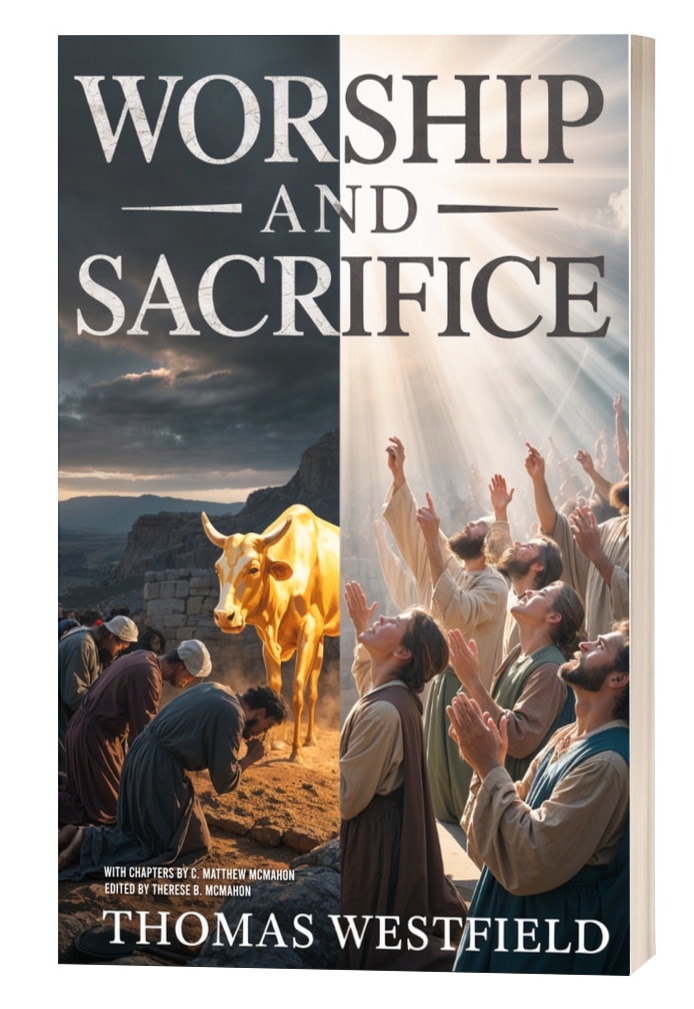
In this book is a searching call to abandon the worship God rejects and embrace the worship He delights in, and that we should delight in. More info here.
Biography of Thomas Westfield (1573-1644):
Thomas Westfield (1573-1644), bishop of Bristol, was born in the parish of St. Mary’s, Ely, in 1573, “and there bred at the free school under Master Spight.” He proceeded to Jesus College, Cambridge, where he was elected a scholar, and afterwards held a fellowship from 1600 to 1603. He graduated with a B.A. in 1592-3, an M.A. in 1596, and a B.D. in 1604. He was incorporated B.D. at Oxford on July 9, 1611, proceeded D.D. at Cambridge in 1615, and was reincorporated D.D. at Oxford on March 26, 1644. On Aug. 5, 1619 he was admitted a student at Gray’s Inn (Grays Inn Admission Reg. ed. Foster, p. 155).
After serving as curate at St. Mary-le-Bow under Nicholas Felton [q.v.] he was presented to the rectory of South Somercotes in Lincolnshire in 1600, which he exchanged on 18 Dec. 1605 for the London living of St. Bartholomew, Smithfield. On April 28, 1615 he was appointed to the rectory of Hornsey, which he retained until 1637. On April 12, 1614 he was nominated to the prebend of Ealdstreet in St. Paul’s Church, which on March 1, 1614-15 he exchanged for that of Cadington Major. On Nov. 14, 1631 he was collated archdeacon of St. Albans, and on Dec. 17, 1633 was included in a royal commission to exercise ecclesiastical jurisdiction in England and Wales (Cal. State Papers, Dom. 1633-4, p. 327).
On the outbreak of the civil war he continued to reside in London, but, falling under suspicion of royalist sympathies (cf. ib. 1640, p. 664), he was “abused in the streets and sequestered from St. Bartholomew.” He fled to the king, and on April 26, 1642 was consecrated bishop of Bristol, in succession to Robert Skinner [q. v.] He had been offered the same diocese as early as 1617 “as a maintenance, but he then refused it; but now having gotten some wealth he accepted it, that he might adorn it with hospitality out of his own estate.” Westfield held his other offices in commendam with his bishopric, probably without deriving any revenue from them. The emoluments of his bishopric also were at first retained from him by the parliamentary party, but on 13 May 1643 they were restored to him by order of the parliamentary committee of sequestrations out of respect for his character, and he was given a pass to Bristol. This good treatment may have been due to his consent to attend the Westminster assembly, which met on July 1. Although his share in the proceedings was small, he was present at least at the first meeting. He died on June 25, 1644, and was buried in the choir in Bristol Cathedral, where a monument was erected to him by his wife Elizabeth (d. 1653), daughter of Adolphus Meetkirk, president of Flanders. By her he had a daughter Elizabeth.
Westfield was a man of nervous temperament, and at Oxford, on the only occasion on which he preached before the king, he was so agitated that he fainted away. He was so pathetic a preacher as to be called the weeping prophet. He was the author of two collections of sermons: 1. “Englands Face in Isrels Glasse, or the Sinnes, Mercies, Judgments of both Nations,” eight sermons, London, 1646, 4to; London, 1655, 4to; reprinted, with three other sermons, under the title “Eleven choice Sermons as they were delivered . . . by Thomas Westfield . . . Bishop of Bristol,” London, 1656, 4to. 2. “The White Robe, or the Surplice vindicated,” four sermons, 1660, 12mo; new edit. 1669, 8vo.
[Cole’s Collections in Brit. Mus. Addit. MSS. 5811 ff. 78-9, 5820 f. 152; Wood’s Fasti Oxon. ed. Bliss, i. 345, ii. 70; Walker’s Sufferings of the Clergy, 1714, ii. 3; Lloyd’s Memoires, 1668, pp. 300-5; Newcourt’s Repert. Londin. i. 95, 128, 296, 653; Le Neve’s Fasti Eccles. Anglicanae; Lansdowne MS. 985, f. 62; Foster’s Alumni Oxon. 1500-1714; Fuller’s Worthies of England, 1811, i. 160; Hennessy’s Novum Repert. Eccles. Londin. 1898, pp. 18, 27, 101, 223; Harl. MS. 7176, pp. 172-5; Hetherington’s Hist. of the Westminster Assembly, 1878, pp. 105, 113.]

Help Support APM
